A local magazine ran an online casino ad dressed up as Ericeira history
On Monday, AZUL Ericeira Mag published what looks like a piece of local history: "From the Grande Casino da Ericeira to online casinos". It opens with the story of the old casino in the building that is now the Casa de Cultura Jaime Lobo e Silva, founded in 1861 as a recreational club and later turned into a gaming hall by the businessman Joaquim Ferreira.
Then it changes direction. Most of the article is about online slots, roulette and blackjack, and how easy they are to play on a phone. Halfway through, it names a specific betting company and links straight to its casino site with the words "casino online". The main image is not a photo of the old casino at all, but a bright cartoon of a phone screaming "JACKPOT!", "YOU WIN!" and "BONUS".
A paid article, not labelled as one
The article appears to be paid for. The file name of its main image reads "artigo patrocinado", Portuguese for "sponsored article". Yet nothing a reader actually sees says so: there is no "sponsored" or "advertising" label on the page, and the link to the betting site is not marked as a paid link either. To anyone scrolling through their feed, it reads like any other story from a local magazine they trust.
Portuguese advertising law is built on the principle that advertising must be clearly identifiable as advertising. Dressing up a betting promotion as a nostalgic piece about Ericeira's heritage does the opposite. The local history is the wrapper; the link is the product.
Why media companies do this
It is not hard to see why it happens. Local and regional media in Portugal have been squeezed for years: print sales and classified ads have collapsed, and most of the online advertising money goes to Google and Meta. Gambling operators, on the other hand, have money to spend and want links from trusted local sites. A sponsored article is quick money for a small publication.
That pressure is real, and AZUL has published plenty of genuine local journalism over the years. But readers can only trust a publication if they can tell its journalism apart from its advertising. Once those blur, every article becomes a little harder to believe.
The cost falls on young people
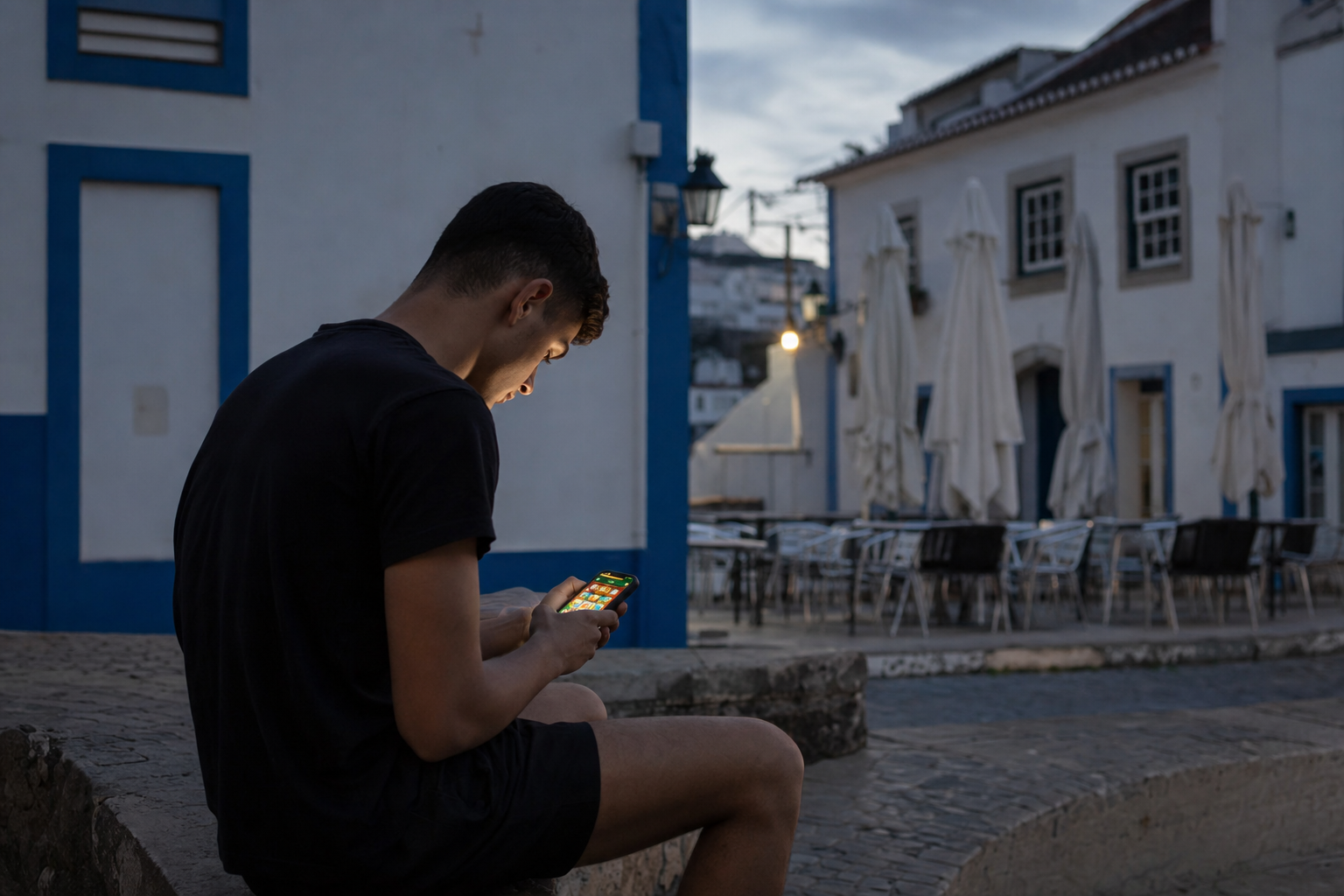
Online gambling has grown fast in Portugal since it was legalised in 2015, and betting brands are everywhere, from football shirts to TV breaks. The people they reach most are young, and young people in Portugal are already having a hard time: low wages, rents that eat most of a salary, and many leaving the country to build a life somewhere else.
For someone in that position, an app promising a jackpot is not harmless entertainment. It is a tempting shortcut that, by design, the house wins in the long run. Promoting it through a trusted local magazine, without telling readers it is an ad, makes it look normal and makes it look local. The article even admits gambling should never be seen as a source of income. It is a shame it was written to send readers to a casino anyway.
If gambling is causing problems for you or someone you know, the SICAD helpline 1414 offers free, confidential support in Portugal.